NOW DELIVERING ACROSS TEXAS*AUSTIN · 200 MI RADIUS
PRODUCTS / POLYASPARTIC / POLYASPARTIC FAST CURE 2 PART FLOORING SYSTEM — 90% SOLID NON YELLOWING NON FADING
SKU RS-POLY-90AF · CAT 03.02 · POLYASPARTIC

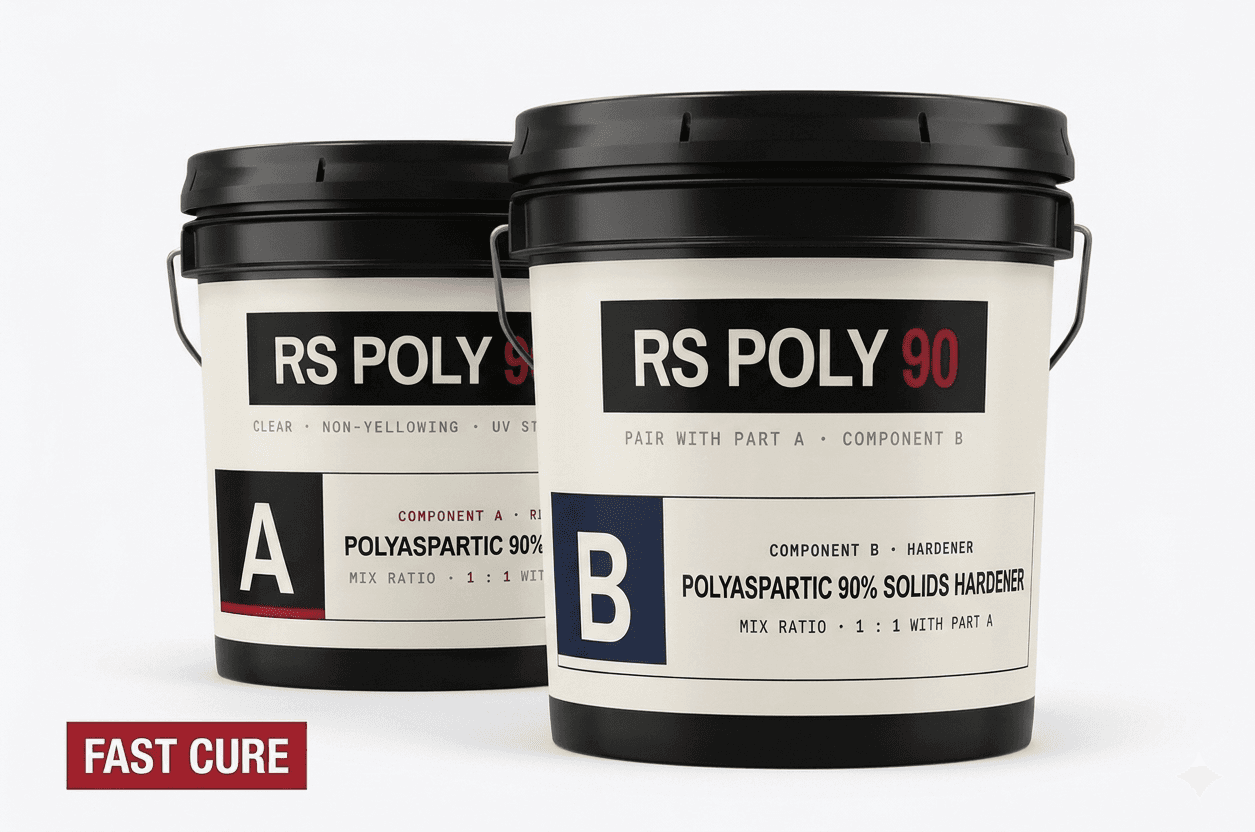
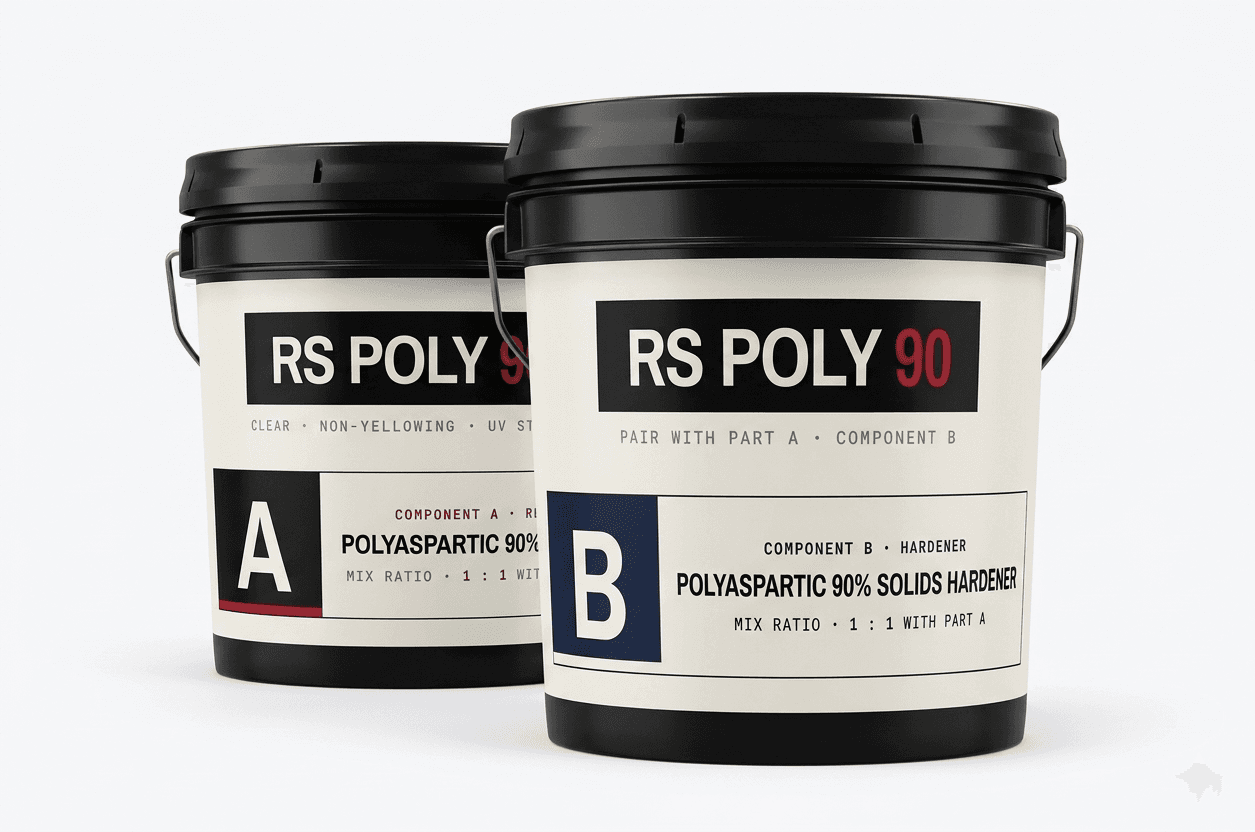
Polyaspartic Fast Cure 2 Part Flooring System — 90% Solid Non Yellowing Non Fading

Same UV-stable chemistry, accelerated. 1–2 hr return-to-service.

UV STABLENON-YELLOWINGLOW ODORFAST CURE90% SOLIDS

Accelerated polyaspartic topcoat. Same UV-stable, non-yellowing chemistry as the RS Poly standard cure, formulated for one-day garage installs and weekend showroom turnarounds. Return-to-service in 1–2 hours.

SOLIDS
90%
WORK TIME
15m
RTS
4–6h
COVERAGE
250
PACK SIZE
2 GAL KIT · 1:1
QUANTITY
KIT
DELIVERY
Show full product detailsHide full product details

Polyaspartics are a specialized two-component system specifically designed for high-performance coatings.

What is a polyaspartic coating? Polyaspartics can be described as a 100% solid, two-component, fast-curing coating with excellent adhesion, low VOCs, and the best UV resistance on the market — non-yellowing, with absolutely no fading or chalking.

Polyaspartic coatings are a hybrid system formulated with a polyurea backbone. Designed to cure quickly — easy mixing at a 2-to-1 mix ratio.

Approved applications include garage floors, industrial coatings, commercial applications, exterior surfaces, petrochemical plants, marine and oceanic barges, light poles, and railcar exteriors.

Polyaspartics as a floor coating provide the best and most durable protection on the market. Approved for high-traffic areas such as convention halls and casino floors.

Polyaspartic coatings can be blended with pigments and/or broadcast flakes (garage coatings).

★ At-a-glance
Work Time10 – 15 minutes
Cure Time8 – 12 hours
Coverage Per Kit250 square feet
Best ApplicationSqueegee
Floor PrepFloor grinded and/or acid-washed; avoid moisture on substrate
§ 01

Technical
Data

REV 03 · APR 2026
Download TDS ←
Download SDS ←

PROPERTY
VALUE
UNIT / METHOD
Solids by volume
90%
Mix ratio
1 : 1
A : B by weight
Work time @ 75°F
10–15 minutes
Work time @ 68°F
15–20 minutes
Work time @ 41°F
30 minutes
Set-to-touch @ 75°F
1–2 hours
Recoat window @ 75°F
4–6 hours
Dry-through @ 75°F
8–12 hours
Maturation (full cure)
7 days
Theoretical coverage
250 SF/GAL @ 8 mil DFT
Dry film thickness
8–12 mil
Specific gravity
~1.0
Color
Clear
Gloss @ 60°
> 90
high gloss
Adhesion / bond strength
> 500 PSI · 100% concrete failure
ASTM D4541
Compressive strength
22,600 PSI
ASTM D695
Flexural strength
18,500 PSI
ASTM D790
Tensile strength
10,500 PSI
ASTM D638
Elongation
10%
ASTM D638
Hardness, Shore D (24 hr)
80–82
ASTM D2240
Taber abrasion CS-17
40 mg loss / 1000 cycles
ASTM D4060
Wet DCOF
> 0.62
ASTM A326.3
Impact resistance
2.5 ft·lb
ASTM D2794
Thinner / dilution
Not applicable — no dilution
Shelf life (sealed)
12 months
Packaging
Pails
compounds
★ READ UP BEFORE YOU POUR

Related
Field Notes

Application guides, prep checklists, and gotcha notes from the field — paired with this product so you know what you're getting into before the kit ships.

HEAT MANAGEMENT100°F+ TIPS
APPLICATION · HEAT

How Hot Is Too Hot to Pour a Garage Floor in Texas?

Why two-part epoxy and polyaspartic kits cook in the bucket on a Texas summer afternoon, and the strategies that keep your pour from gelling before it hits the floor. Practical guidance for homeowners and contractors pouring in the heat.

9 MIN READREAD →
PROJECT WALKTHROUGH★ FIRST POUR
DIY · GARAGE

DIY Garage Floor Coating: A Real Weekend Walkthrough (Texas Edition)

A two-car garage from bare concrete to glossy polyaspartic in three days. Tools, costs, every step in order, and the common mistakes that wreck DIY floors. Written for Texas heat and Texas slabs.

14 MIN READREAD →
101 · COATINGS BASICS★ START HERE
COATINGS 101

Polyaspartic vs Epoxy vs Polyurea: What Actually Differs

A plain-English guide for homeowners. What each coating does well, where each one fails, and which combination ends up on almost every garage floor that lasts. Written by a Texas distributor.
12 MIN READREAD →